How to Discover Activities and Connect With People on PlanMate
Use PlanMate discovery, city selection, search, categories and saved plans to find an activity that fits your interests and schedule.
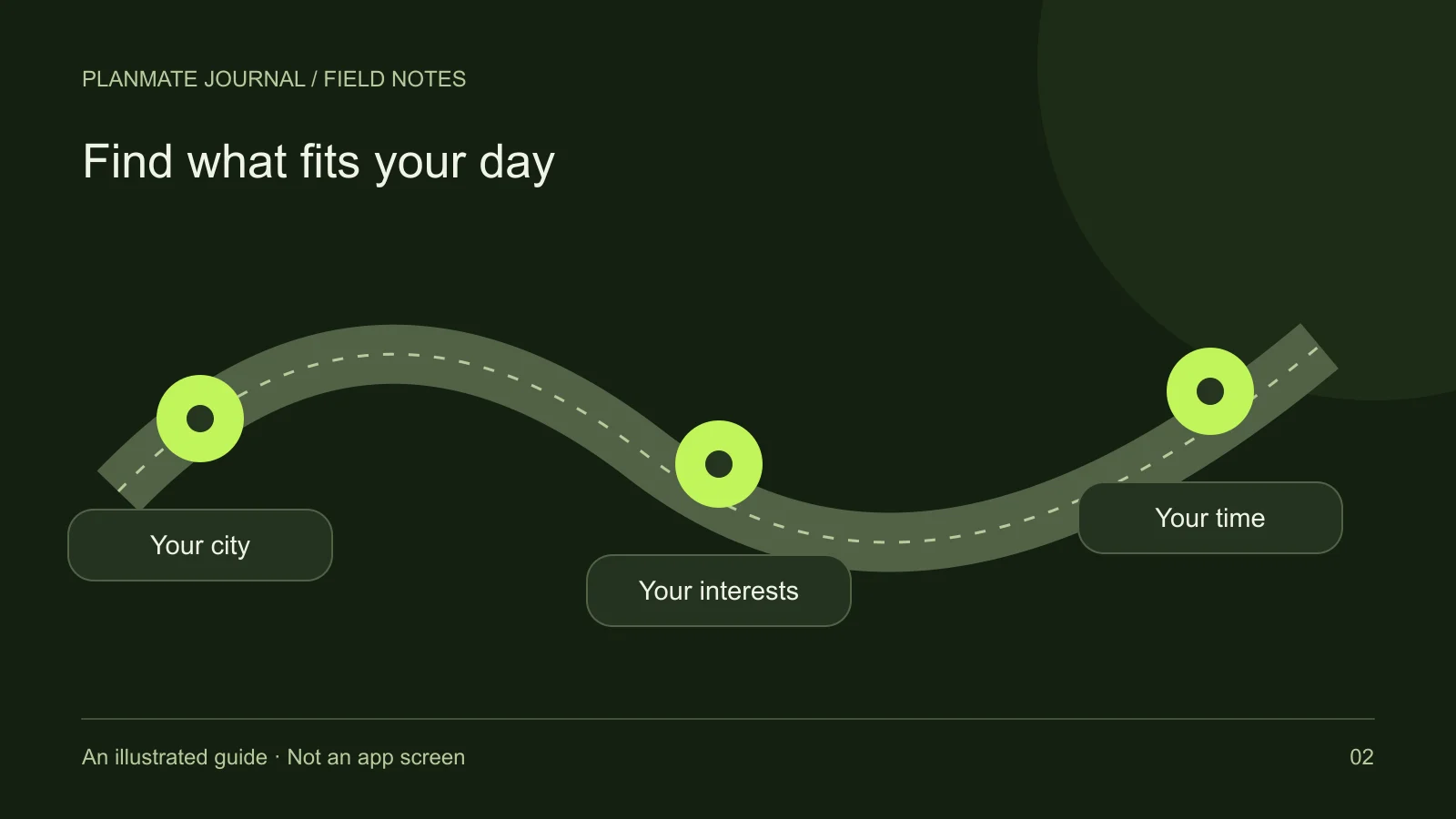
An interesting plan is only useful if you can attend it. Start a PlanMate search with three limits: where you can get to, when you are free, and what you feel like doing. That gives Home and Explore a more useful role than an endless feed of possibilities.
For example, an hour after work may suit a nearby coffee gathering better than an outdoor trip. Use search and filters to make a shortlist, then open each listing to check the details that a card cannot tell you.
Give discovery a useful starting point
Check the discovery city before interpreting the results. A selected city and the device's current location are related but different pieces of information. You may be browsing a place you intend to visit, or your location permission may be unavailable. Make sure the context matches where you want to participate.
Then choose a category that reflects the activity you want. Coffee, Sports, Arts, Outdoors, and other categories are starting points, not strict definitions of the people who join them. You do not need to identify as an expert to browse an interest. Read the experience expectations in each plan before deciding whether it is appropriate.
Home can also expose plans and media you might not have searched for. Use that experience for inspiration, but do not mistake the order of recommendations for a quality certification. A recommendation is a discovery aid. It does not guarantee that a host has the exact experience you need or that you will feel comfortable with every attendee.
Search for activities in ordinary language
Use a short phrase connected to what you want to do: “coffee,” “beginner,” a venue name, or a recognizable activity. If a narrow search produces little, try a broader category or a shorter term. Hosts describe similar activities in different ways, and a useful plan may not use your preferred wording.
Search results depend on available listings and the discovery context. The absence of a result is not proof that nobody in a city shares your interest. Likewise, finding one attractive card does not establish that its timing or capacity still works for you. Open the listing and review the current details.
Consider keeping two separate ideas in mind: the ideal activity and an acceptable alternative. If you wanted a book discussion but find a relaxed café conversation, ask whether that still meets your goal of spending time with people. Flexibility can be useful without becoming pressure to join something you do not enjoy.
Use filters to remove practical mismatches
Explore includes filters for distance, price, and availability, alongside sorting choices. Distance filtering needs usable location information. Plans without a known distance may not appear within a selected radius. If your results seem unexpectedly sparse, check the location context before assuming the app has no nearby activities.
Price filtering distinguishes listed free and paid activities. It does not explain every incidental expense. A free plan at a café may still involve buying your own drink; an outdoor plan may require transport. Read the description and ask a specific question if the expected spending is unclear.
Sorting can help you compare upcoming plans, nearer options, or activities with participation. Popularity is not the same as suitability. A smaller group may be easier for conversation, while a fuller sports activity may offer the numbers needed to play. Use participant information to understand the format, not as a score of a host's worth.
Read the details behind the card
Before joining, inspect the time, location, duration, description, capacity, and preparation information. Look for a recognizable meeting point and a reasonable explanation of what happens during the activity. A beautiful photo should not distract from an unclear schedule or a venue you cannot comfortably reach.
Read the host's profile as context. A specific bio and relevant interests can help you formulate a question, but you should not infer intentions from a photograph alone. A verified badge is one limited account signal, not a reason to ignore uncomfortable behavior. The verification guide explains that distinction.
If clarification is needed, keep your message narrow. “Is this suitable for someone who has never played before?” is easier to answer than “Tell me everything about the event.” Respect the host's response and your own limits. It is fine to decide that an activity is not the right fit.
Save plans without confusing saving with joining
Saving is useful when comparing two or three options. For example, you might save an afternoon walk and a board-game gathering, then choose after checking your transport. A saved plan remains a reference point; it does not reserve capacity or place you on the attendee list.
Following someone can help maintain a social connection, but it is also separate from participation. A follow does not automatically join future plans, give access to a group conversation, or create an obligation for the other person to respond. Keep the meaning of each action clear.
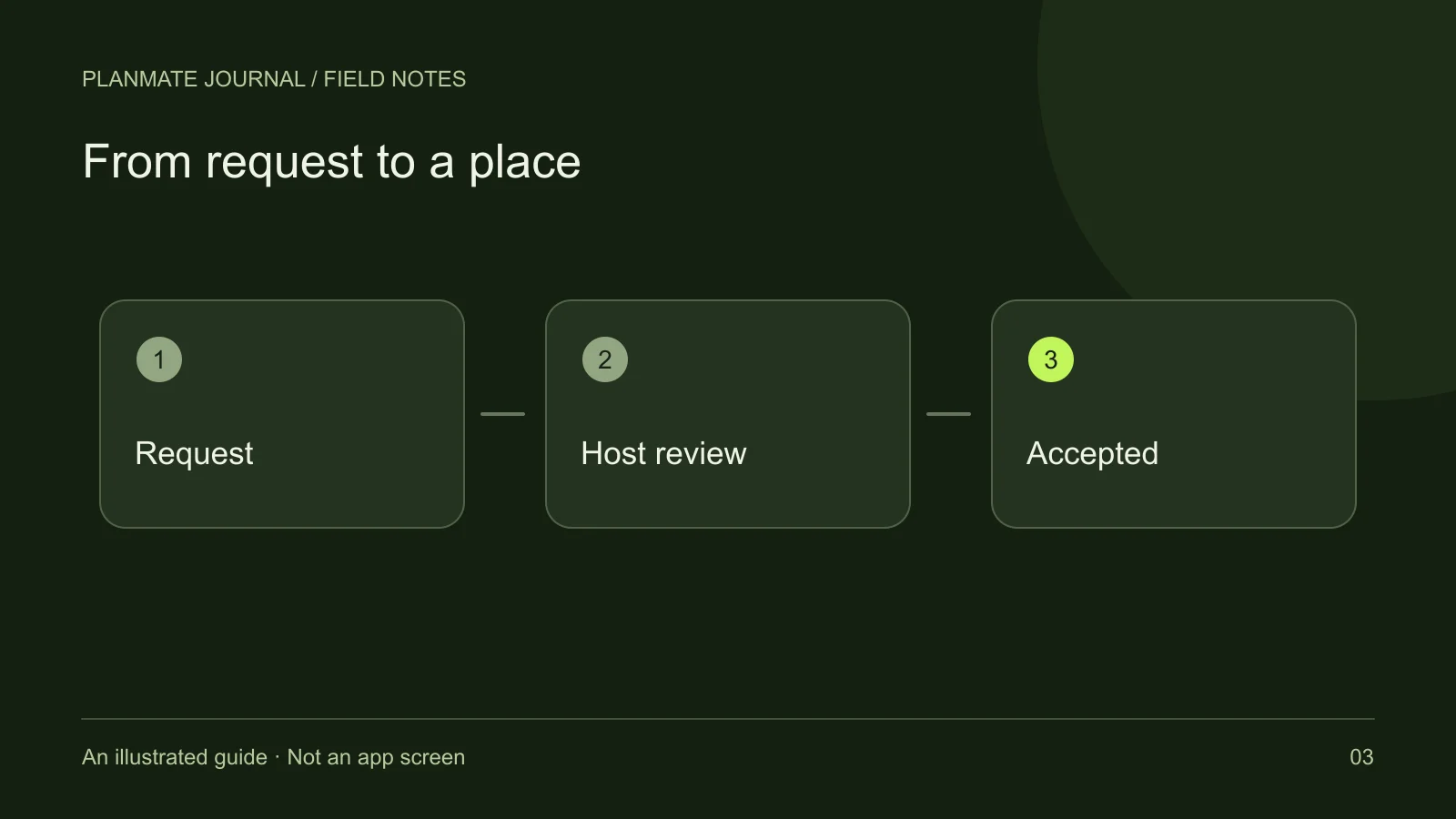
Once you choose an activity, use the joining flow and verify the resulting status. For free plans, the app supports requests that a host reviews. A pending request needs a decision before you treat yourself as confirmed. Our step-by-step joining guide covers what to do next.
Turn browsing into one realistic next step
Set a stopping point for discovery: one request, a shortlist of three plans, or a clear idea for an activity you could host. Endless comparison can make a simple choice feel larger than it needs to be. You can enjoy an ordinary activity without proving that it was the best possible option.
If nothing fits, use the gaps as planning information. Perhaps you want a shorter duration, an earlier start, or a beginner-friendly format. Those are useful details for creating your own plan, not reasons to invent demand or promise a large turnout.
For more inspiration, explore 15 group activity ideas. The goal is a clear bridge from interest to action: something you understand, can attend, and would genuinely like to try.