Why Profile Verification Matters in Social Networking
Explore what profile verification can tell you, what it cannot prove, and how to combine a badge with careful decisions about meeting people.
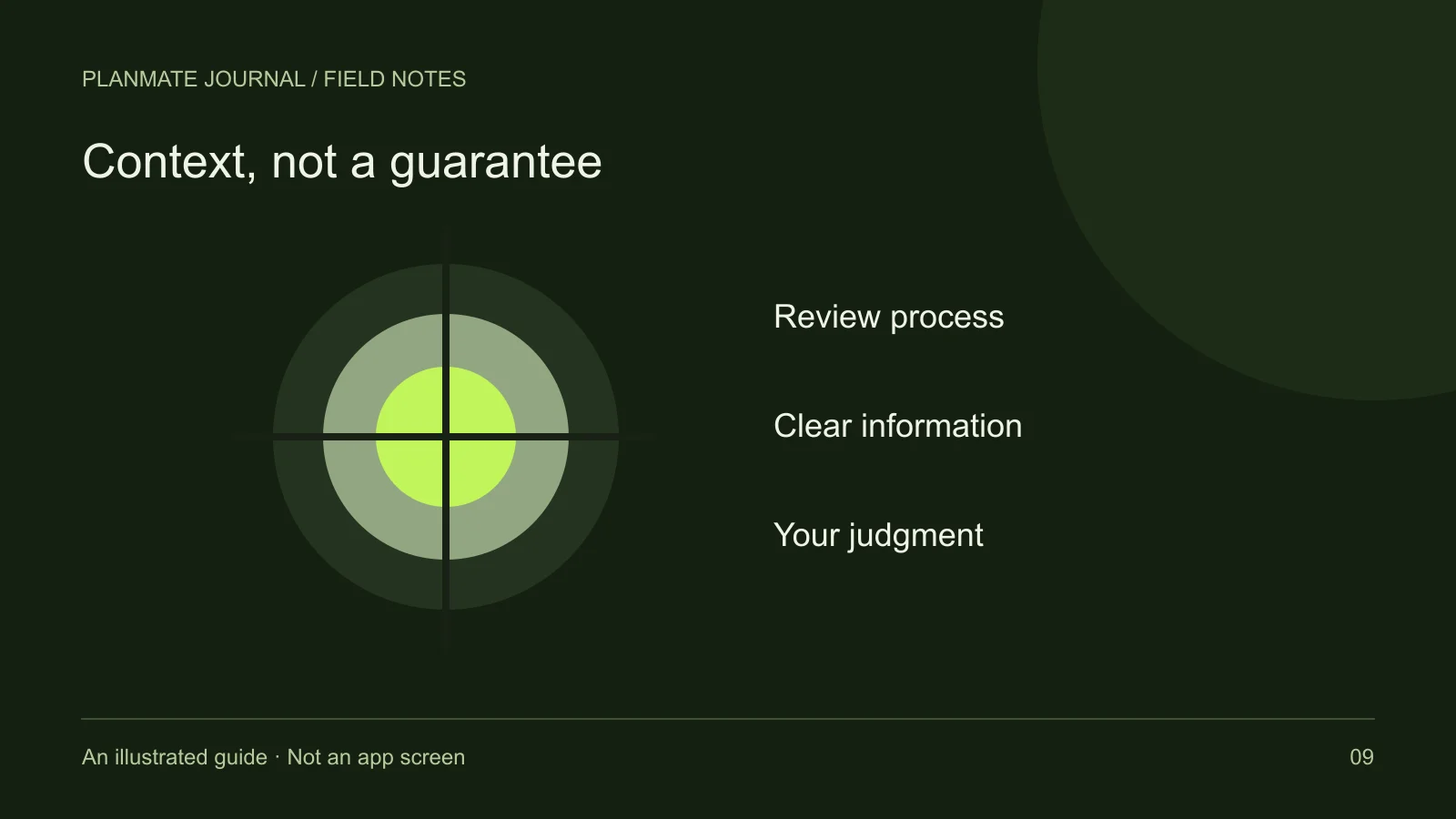
What did a platform actually check before displaying “verified”? That question is more useful than deciding whether a badge looks reassuring. Across services, the same word can refer to control of an email address, a selfie review or another process entirely.
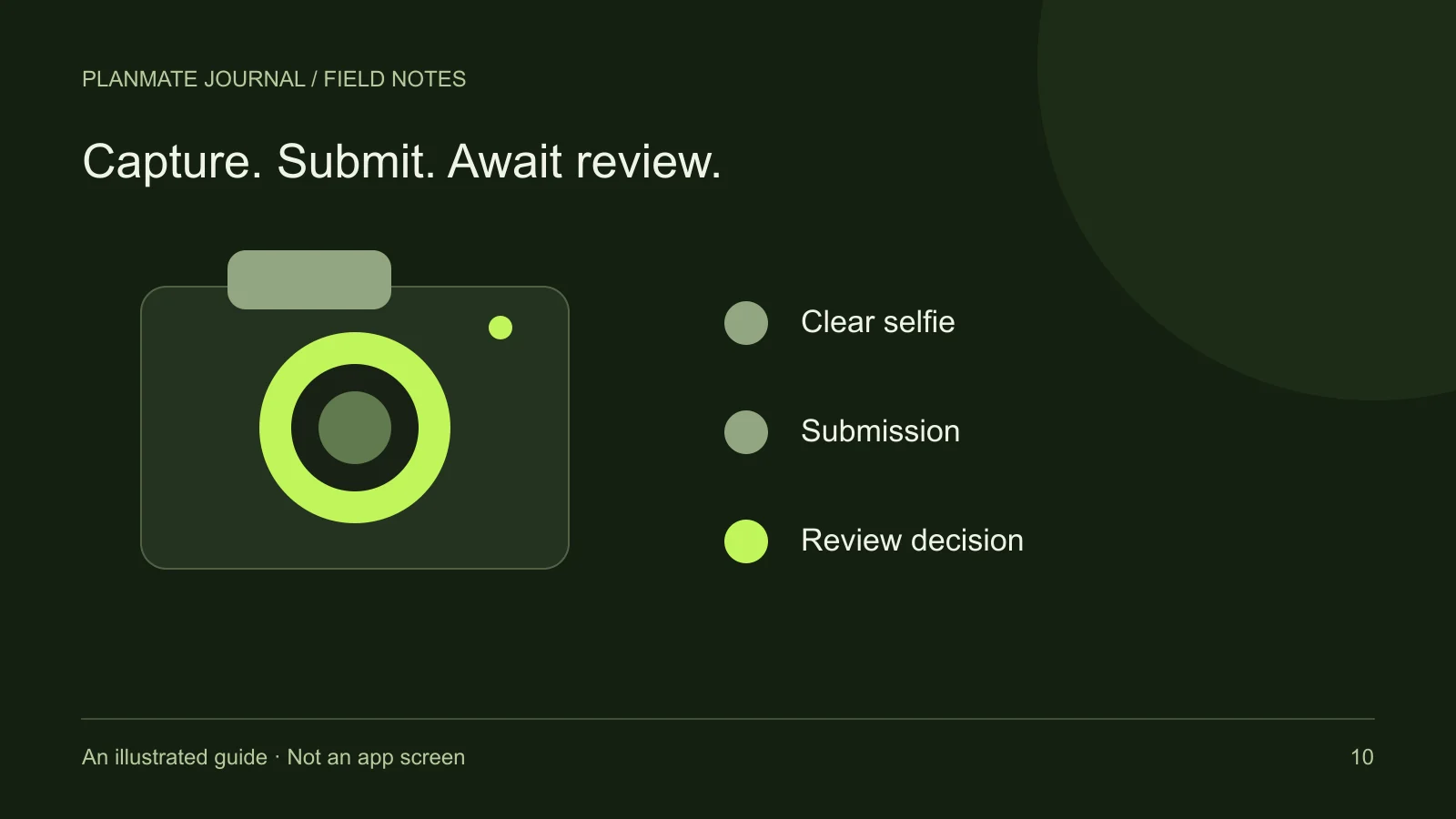
PlanMate’s reviewed workflow uses selfie submission and manual review. Understanding that scope lets you use the badge as context while still checking the activity, asking questions and keeping your own boundaries.
A badge should represent a defined process
The first question is what the badge means in the app where it appears. One service may confirm control of an email address; another may review a selfie. A third may use the same word for a paid account feature. Similar-looking symbols can represent very different processes.
On PlanMate, account login and profile verification are separate. Completing sign-in or an OTP step does not mean a selfie review has been approved. The verification workflow has its own statuses, and approval is distinct from a pending submission. That separation is worth understanding before you use a badge to make a meetup decision.
Clear explanations benefit both the person applying and the people viewing the profile. The applicant knows what step remains, while other members avoid assuming that an incomplete review has already established something. A badge is most useful when its scope is understandable.
What verification can contribute
A completed review can show that the account went through the platform's stated process. It creates another piece of context alongside a profile, activity history, and the person's communication. For someone deciding whether to ask a practical question or attend a public gathering, that context may be relevant.
Verification can also make the difference between account setup and review visible. A person who has submitted a selfie can see that the request is pending rather than wondering whether the upload itself was approval. A person whose request needs attention can use the available guidance instead of guessing.
These are useful functions without requiring exaggerated claims. There is no need to invent accuracy rates, call every member verified, or describe the process as fraud-proof. A limited, accurate explanation is more trustworthy than an impressive promise that the actual workflow cannot support.
What verification cannot tell you
A profile badge does not predict how someone will behave at a meetup. It does not guarantee that the activity will be well organized, that the venue is suitable, or that you will feel comfortable. It also does not establish that a person has the skills or qualifications required for a specialist activity.
Do not treat a selfie review as a background check or assume it involves government documents unless the service explicitly describes that process. Different identity-related tasks can coexist in an app without being interchangeable. For example, payment-account information and a social profile review have different purposes.
The absence of a badge should not automatically be treated as evidence of deception either. A person may not have submitted a request, may be waiting for review, or may have chosen not to complete an optional process. Evaluate specific behavior instead of turning a single symbol into a verdict.
Combine account context with practical questions
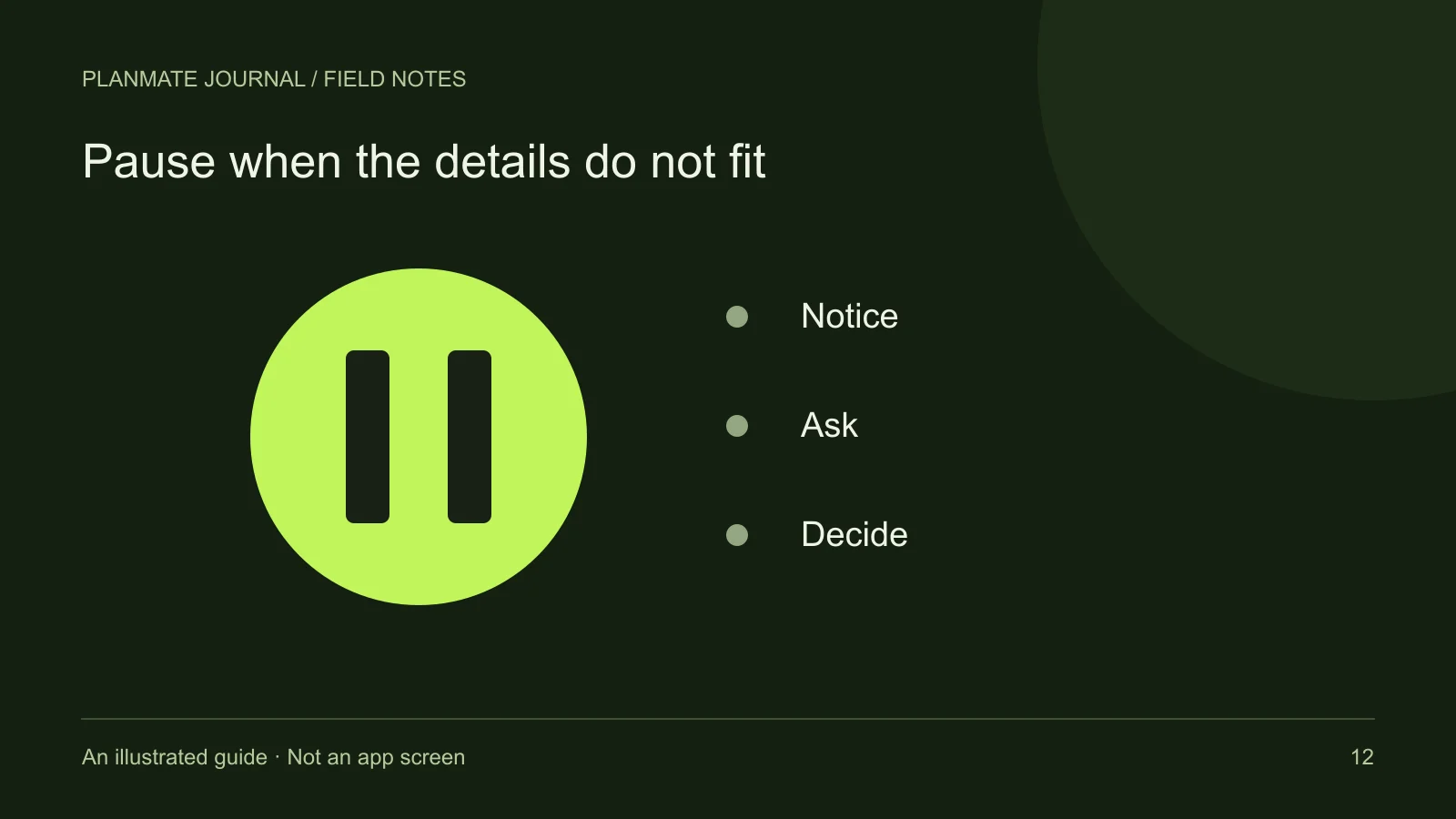
When considering an activity, read the description, timing, meeting place, and preparation notes. Ask a focused question if something important is missing. A clear answer about equipment or the meeting point is directly relevant to your decision; a badge does not fill those gaps.
Watch how boundaries are handled. If you decline to share a phone number or ask to meet in a public setting, the response matters. Pressure, evasiveness, or repeated attempts to move you away from your stated comfort level should not be excused because the profile looks polished.
Our guide to recognizing suspicious activity focuses on patterns rather than appearances. The aim is not to diagnose strangers or become an investigator. It is to notice when you lack enough clarity to proceed comfortably.
Applying for verification thoughtfully
If you choose to use PlanMate verification, follow the instructions in the app. Prepare a clear selfie with suitable lighting, review it, and submit through the supported process. Do not send private images or documents to another member who claims they can approve the request for you.
After submission, check the displayed status. Pending means the review has not yet resulted in approval. Completing a camera or liveness step does not itself produce an approved badge. Avoid repeatedly submitting material simply because the review is not immediate.
If the request is rejected or cancelled, follow the options shown for your account. A rejection may involve the submission quality or guidelines; it should not be interpreted as a public judgment of your worth. The selfie verification guide covers the workflow in detail.
Keep meetup eligibility separate
A verified person still needs a place in the activity. They may need host acceptance, available capacity, or a confirmed booking where checkout is offered. They may also need the equipment and experience described by the host. Verification does not automatically satisfy those conditions.
For hosts, avoid saying “verified people can join” if what you actually mean is that you still review requests. Explain the process you use rather than implying an automatically enforced rule. For participants, check your actual participation status before travelling.
The verification and eligibility guide separates account review, admission, payment, and attendance. Those distinctions make it easier to ask the right question when an interface or message is unclear.
Use verification without outsourcing your judgment
The healthiest interpretation of a badge is modest: it represents a particular completed process. It can inform your decision, but it should not make the decision for you. You remain free to ask questions, decline an invitation, choose a different venue, or leave a situation that does not feel right.
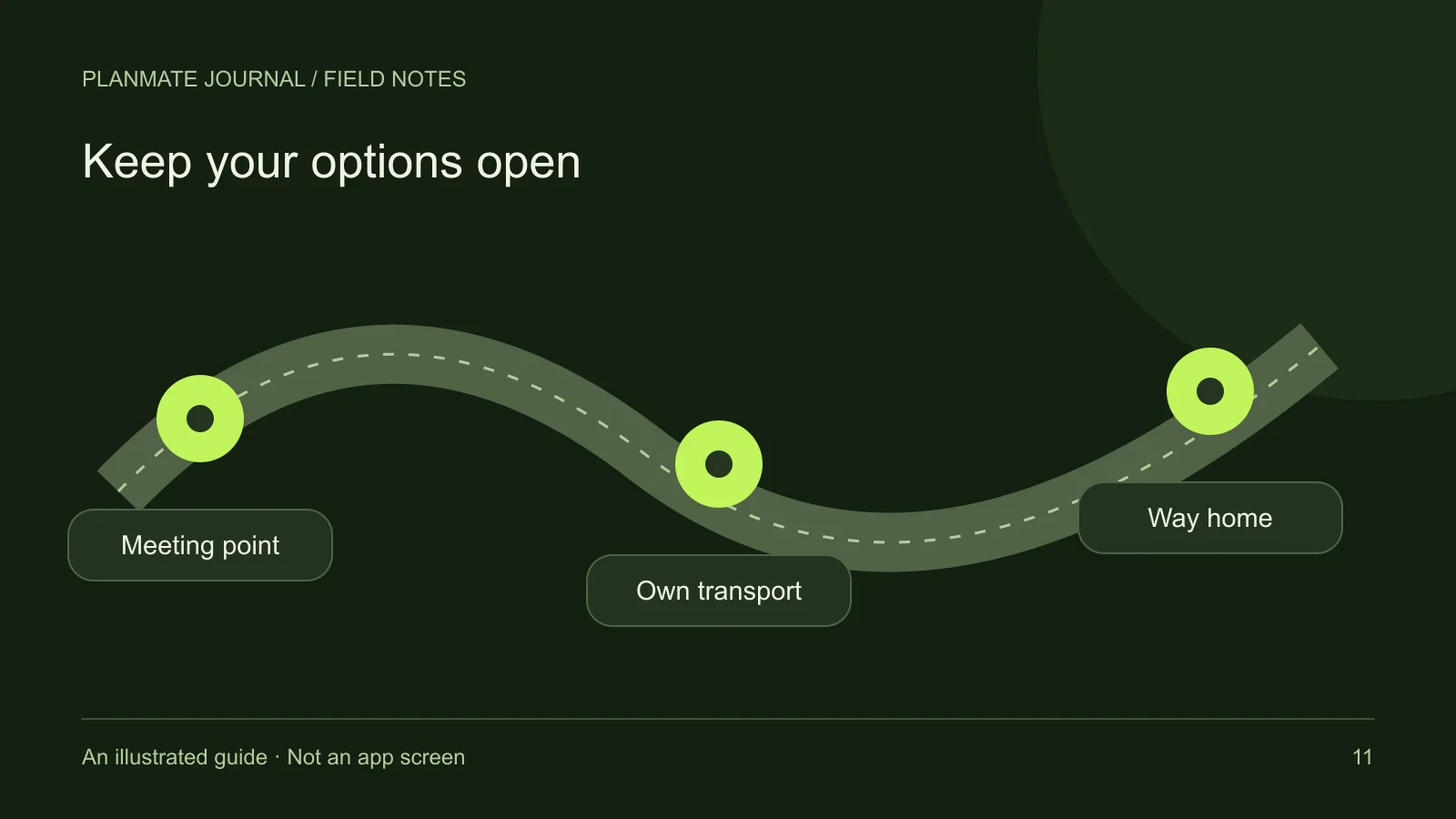
For a first meeting, review practical details and keep your own boundaries around transport, information sharing, and time. Read meeting people through social apps safely for a checklist. A careful plan is not a statement that you distrust everyone; it is a way to make participation more deliberate and comfortable.