How to Stay Safe When Meeting New People Through Social Apps
A practical before-during-after checklist for public meeting places, boundaries, independent travel, communication and leaving when uncomfortable.
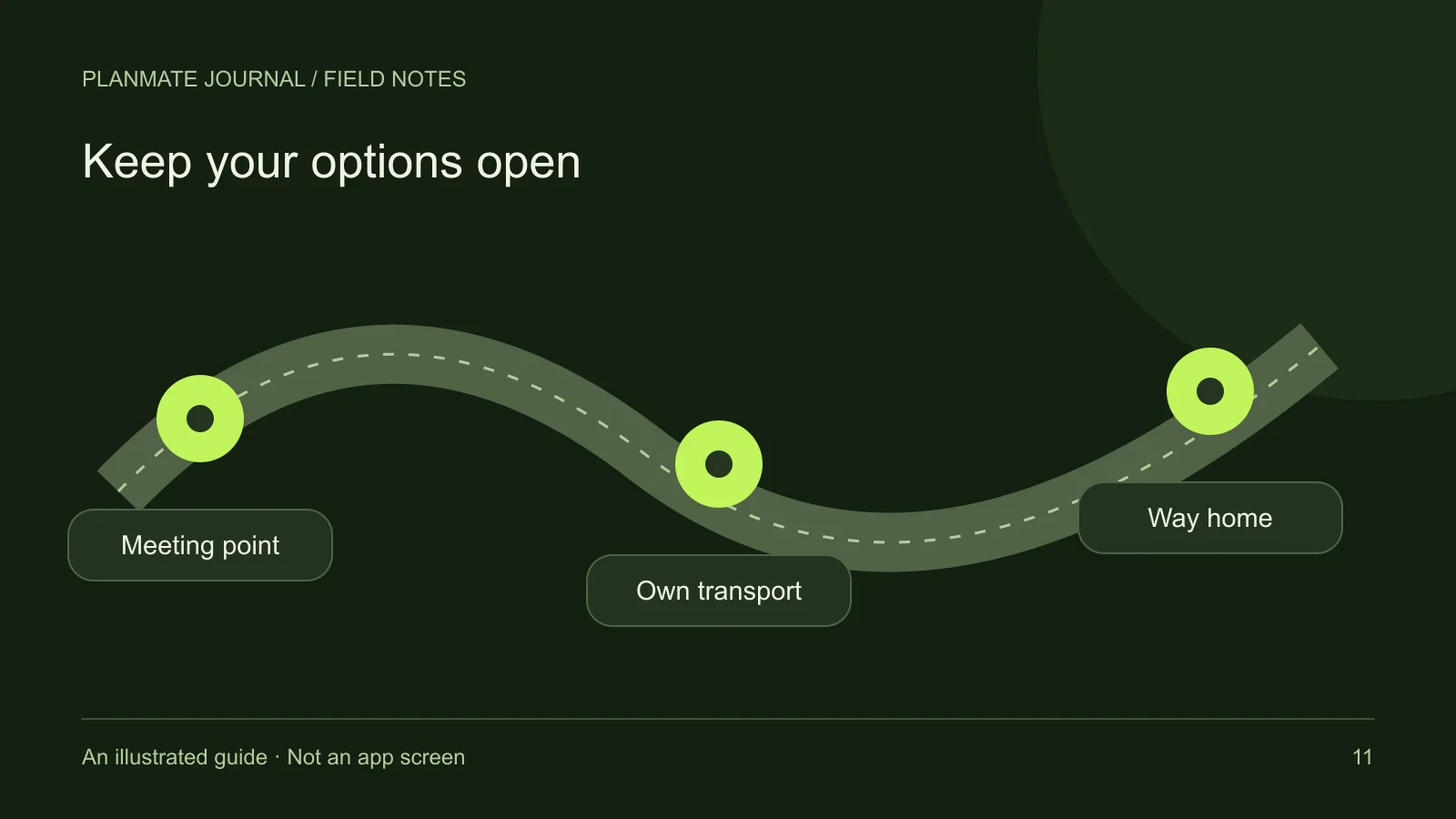
Before a first meetup, make sure you can answer three questions: Where am I meeting the group? How will I get home? What will I do if the arrangement changes? You do not need to predict every problem, but you should retain a choice about what happens next.
This checklist supports preparation; it cannot guarantee safety. If you are in immediate danger, get to a safer place and contact local emergency services rather than waiting for an app report to be reviewed.
Before accepting: make the plan understandable
Read the activity description and check the venue, start time, expected finish, and host instructions. If the plan is vague, ask one or two concrete questions before committing. “Which entrance are we meeting at?” and “Is this suitable for a beginner?” are reasonable requests, not signs that you are being difficult.
Consider whether the proposed setting lets you arrive and leave independently. A recognizable public meeting point may be more comfortable for an initial gathering than a private home or an isolated location. Do not feel obliged to accept a last-minute venue change just because you have already spent time preparing.
Keep the activity within your practical limits. If you do not have suitable equipment, experience, transport, or time, choose a different plan. Enthusiasm from other participants does not make an unsuitable activity manageable for you.
Share enough to coordinate, not your whole routine
Early communication rarely needs your home address, financial information, identity documents, or detailed work schedule. A preferred meeting point and a first name may be enough for coordination. You can decide later whether you want to share more after you have met and feel comfortable.
Be cautious about photographs that reveal information in the background. A picture can include a visible address, access badge, document, or other person who did not agree to be shared. Review media before posting it rather than relying on someone else to notice the detail.
On PlanMate, public-facing profile and plan content should be treated as information other people may see. Do not assume a shared link is private or that a saved plan creates a confidential invitation. The visibility guide explains those distinctions.
Make your own arrival and departure plan
Know how you intend to get to the venue and how you can leave. Avoid making your ability to depart entirely dependent on a person you have not met. Check the practical route and expected timing rather than relying only on the distance shown in discovery.
If helpful, tell a trusted person where you are going and when you expect to finish. Agree on a simple check-in that fits your situation. This is a personal arrangement, not a claim that PlanMate automatically monitors your whereabouts or contacts someone if you do not respond.
Keep your phone usable for the information and communication you need. That might include enough battery, the meeting instructions, and a way to reach someone you trust. Do not let a desire to arrive perfectly prepared turn into a reason to ignore a concern that arises on the way.
At the venue: compare the situation with the plan
Check whether the location, people, and activity broadly match what you agreed to. If the gathering has moved somewhere unexpected or become a different kind of event, pause and ask. You do not have to continue simply because someone says everyone else is comfortable.
Introduce yourself at a pace that works for you. You can decline personal questions, photographs, contact exchanges, or an invitation to continue elsewhere. A polite refusal does not require a detailed explanation. “I am heading home after this activity” is a complete boundary.
Pay attention to how people respond to small boundaries. A person who accepts a no makes coordination easier. Repeated pressure, ridicule, or attempts to isolate someone deserve attention regardless of how polished the profile appears.
Do not let badges replace observation
PlanMate's verification workflow includes a selfie submission and manual review. It should not be interpreted as a background check or a promise about future conduct. An approved badge does not mean you must trust an unrelated request, send money, or disclose information you would otherwise keep private.
At the same time, avoid judging people as suspicious simply because their profile is brief, they are quiet, or they do not have a badge. Focus on specific actions and inconsistencies. You are deciding whether the situation works for you, not trying to diagnose someone's character from an image.
The profile verification article explains the limits of that signal. It can be part of your context without becoming a shortcut around practical judgment.
If something feels wrong, preserve your options
You can step away, contact someone you trust, ask venue staff for help, or leave. You do not need to wait until you can prove a violation before deciding an activity is not right for you. Avoid escalating a confrontation merely to obtain an explanation or collect more evidence.
If you later report a concern, describe the behavior and relevant context accurately. Keep any information you already have that is appropriate to share with support, but do not publish private details or encourage a group to confront the person. Reporting is a request for review, not a public trial.
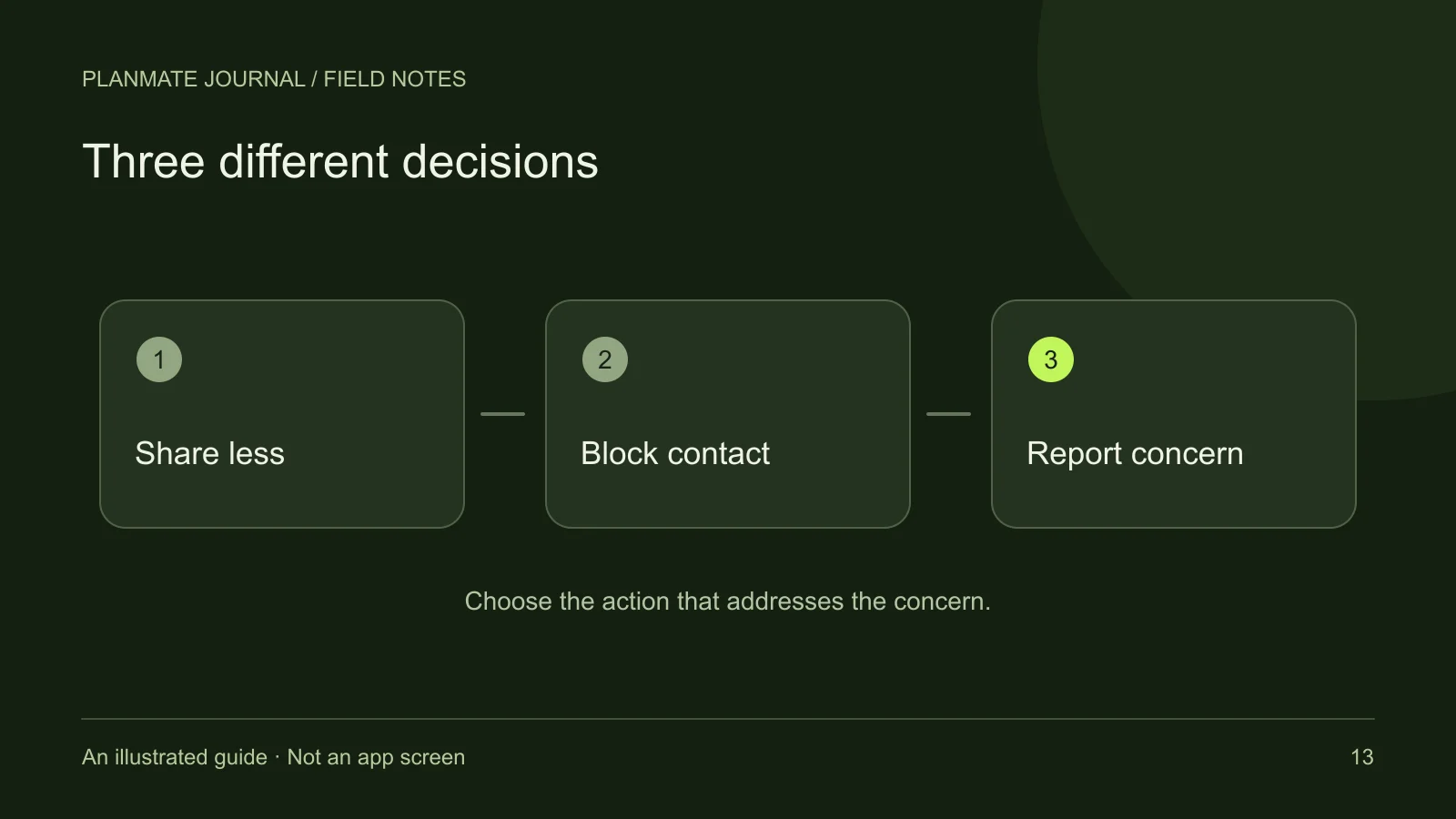
PlanMate includes reporting and blocking controls. A block and a report serve different purposes, so check which action you need. The privacy and reporting guide explains the tools without claiming that they erase every copy or guarantee an immediate response.
Afterward: reflect without forcing a result
Ask yourself whether the activity felt comfortable, whether the practical details were clear, and whether you would choose a similar plan again. You do not owe a second meeting because the first one was pleasant. You also do not need to turn an ordinary conversation into a lasting friendship to consider the outing worthwhile.
If you want to follow up, keep it simple and optional. If you do not, maintain the boundary respectfully. A good social experience leaves room for different levels of interest. Preparation, clear communication, and the freedom to change your mind are more useful than any promise that meeting strangers can be made risk-free.