How to Recognize Fake Profiles and Suspicious Activity Online
Spot concerning patterns without judging appearances, protect your account information, and respond calmly to pressure or inconsistent meetup details.
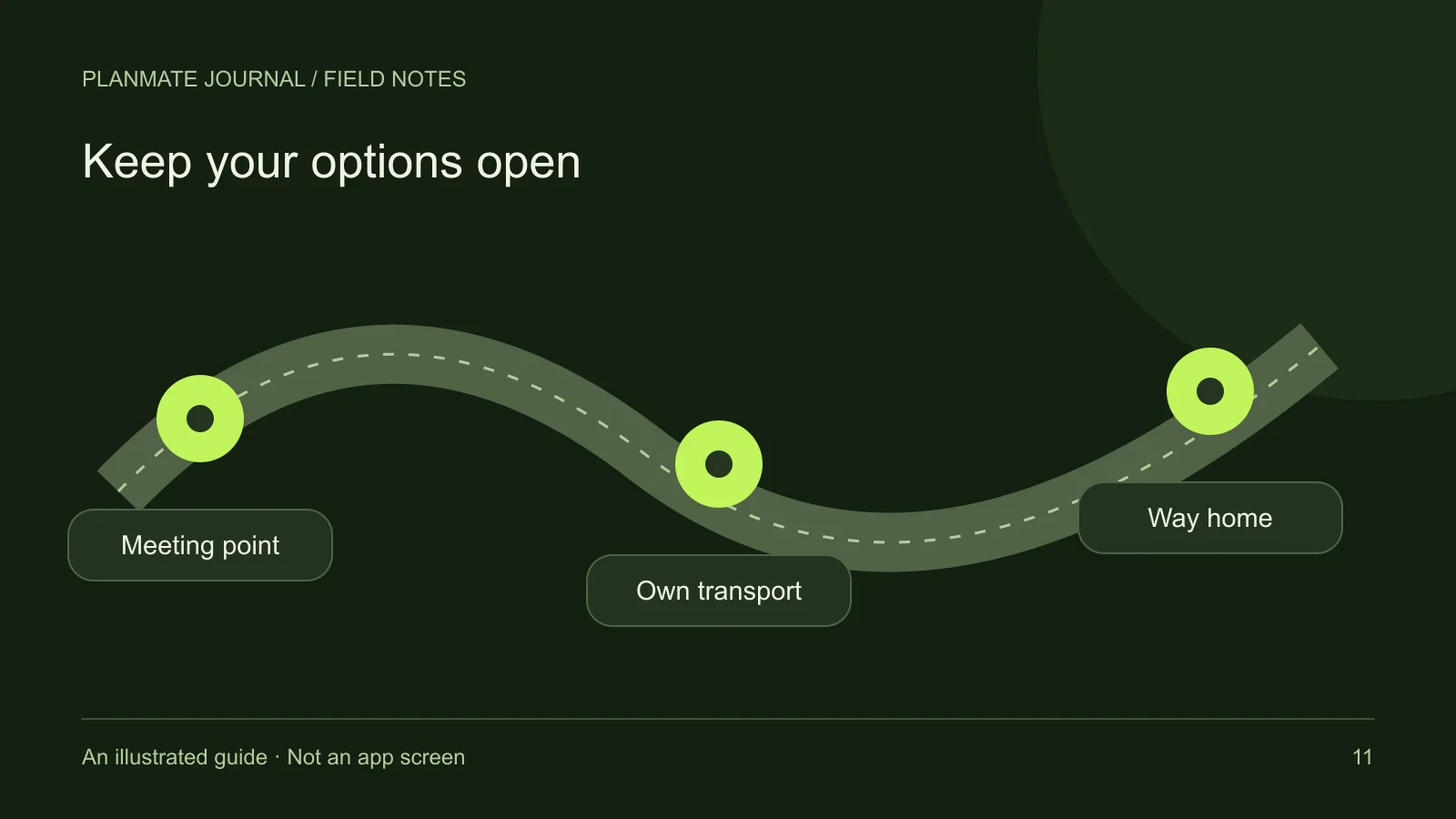
The listing names a café, but a message asks you to go to a private address. Or a free activity suddenly requires a separate transfer. Those changes deserve a question because they alter the plan—not because of how the sender looks or how polished their profile is.
Focus on what someone asks you to do and how they respond to a reasonable boundary. You do not need to prove an account is fake before declining an invitation, stopping contact or reporting a specific concern.
Look for inconsistencies that affect the plan
Minor differences in wording are not automatically suspicious. People make mistakes and describe places informally. Focus on inconsistencies that change what you are agreeing to: a public venue becoming a private address, a free activity suddenly requiring an unrelated transfer, or a host refusing to explain what the gathering involves.
Ask a direct question about the specific issue. “The listing says the café entrance, but this message gives another location. Which is correct?” gives the person a chance to clarify. A clear explanation is more useful than continuing a conversation in which everyone relies on different details.
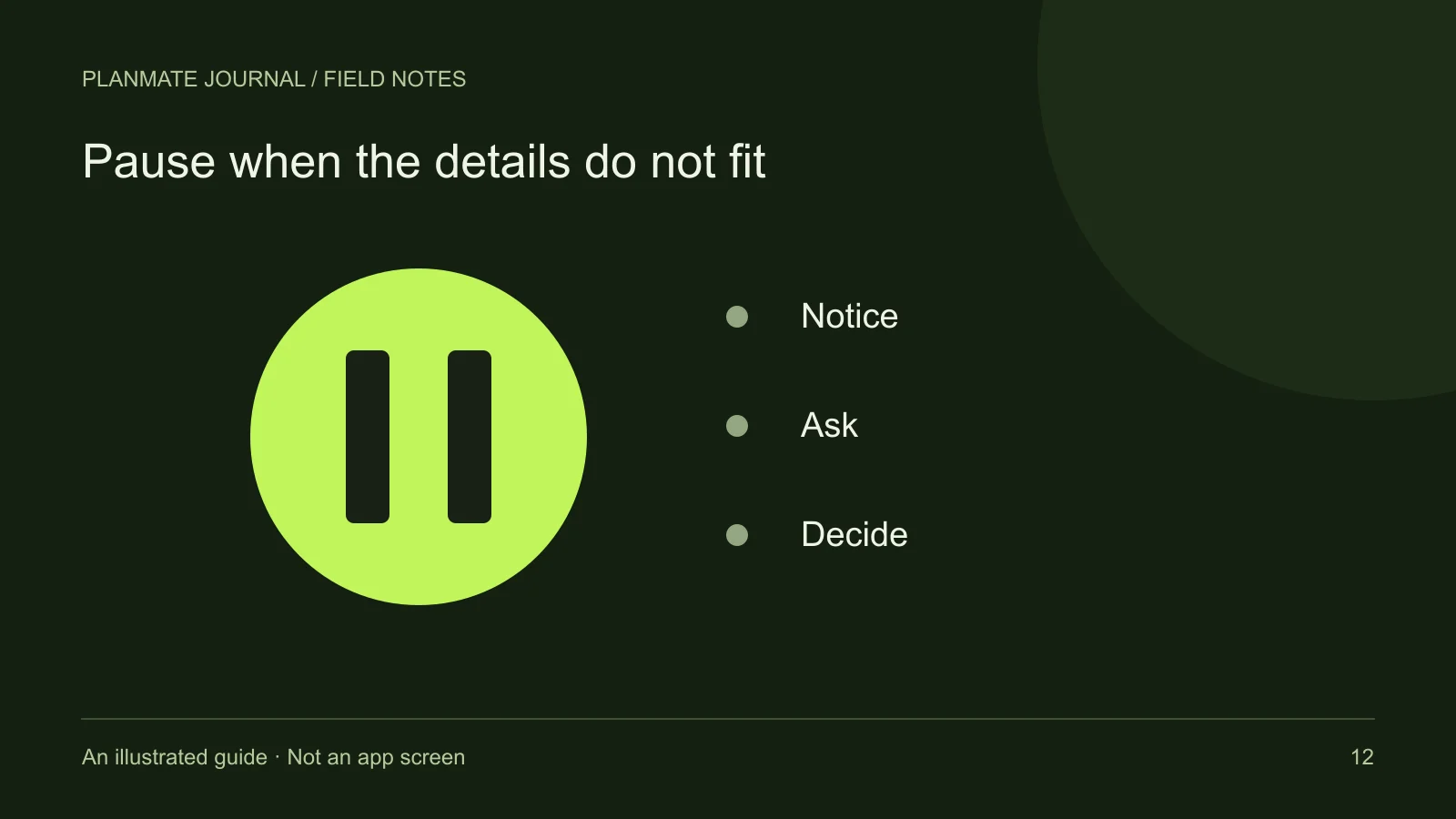
If the answer creates more pressure rather than clarity, pause. You do not need to keep negotiating until the person agrees that your concern is reasonable. A plan should become easier to understand as the conversation progresses, not more dependent on accepting unexplained changes.
Be cautious with urgency and secrecy
Pressure can make an ordinary decision feel like an emergency. Messages such as “You must do this now” or “Do not tell anyone about this arrangement” deserve careful consideration, especially when they involve money, personal information, or changing the meeting setting.
Legitimate plans can have deadlines, but a deadline should still allow a clear explanation of the activity and conditions. Someone who cannot answer a basic question because you are supposedly running out of time is asking you to act with less information. You are free to decline that trade-off.
Secrecy is different from privacy. Choosing not to publish your personal number is a privacy boundary. Being told to hide a payment request or meeting change from people you trust can reduce your ability to evaluate the situation. Do not confuse those two things.
Protect account access and payment information
Do not share passwords, one-time codes, or recovery information with a person who says they need them to add you to an activity. Those credentials are not ordinary meetup logistics. A host needs to know whether you are participating, not how to enter your account.
If a message asks you to use a link or form, consider whether you expected it and whether it belongs to the service you intended to use. Open the app through your usual route when in doubt rather than following an unexpected message. Avoid entering sensitive information just because the message uses familiar branding.
For any paid activity that offers checkout, use the supported flow and check the resulting booking status. This article does not establish that a particular payment provider is live. It also does not endorse separate transfers requested in a chat. If the arrangement is unclear, ask support before proceeding.
Do not confuse confidence with credibility
A convincing tone, polished media, or a friendly introduction can make a person seem familiar quickly. Those qualities do not establish that the activity exists as described. Read the practical details and ask the same questions you would ask of a less polished listing.
Likewise, a verified badge should be interpreted according to the actual process it represents. PlanMate's profile review is not a guarantee of behavior, a background check, or a promise that every activity associated with the account will be suitable. See why verification matters for a balanced explanation.
Avoid the reverse mistake of treating ordinary differences as evidence of fraud. Language style, appearance, shyness, or a lack of social popularity are not reliable reasons to accuse someone. Focus on conduct that is relevant to your decision and on claims you cannot reconcile with the plan.
Notice how boundaries are received
Try a clear, ordinary boundary: you prefer to meet at the listed public venue, you will arrange your own travel, or you are not sharing a personal number yet. A person may ask a reasonable clarifying question, but repeated pressure after you have answered deserves attention.
You do not need a perfect explanation for every boundary. “I am not comfortable with that” is enough. If the person mocks the boundary, threatens to exclude you unless you comply, or keeps changing the request, you can stop responding rather than trying to persuade them to agree.
This applies to hosts as well as participants. A host can decline requests to bypass the participation process, bring unconfirmed guests, or publish other attendees' personal details. Clear procedures should make coordination easier, not create a contest over who can pressure the other person more effectively.
Respond without escalating the situation
If you decide not to continue, keep the response brief or stop the interaction where appropriate. Do not organize a confrontation to test whether the account is genuine. Avoid publicly posting personal information or inviting others to harass the person.
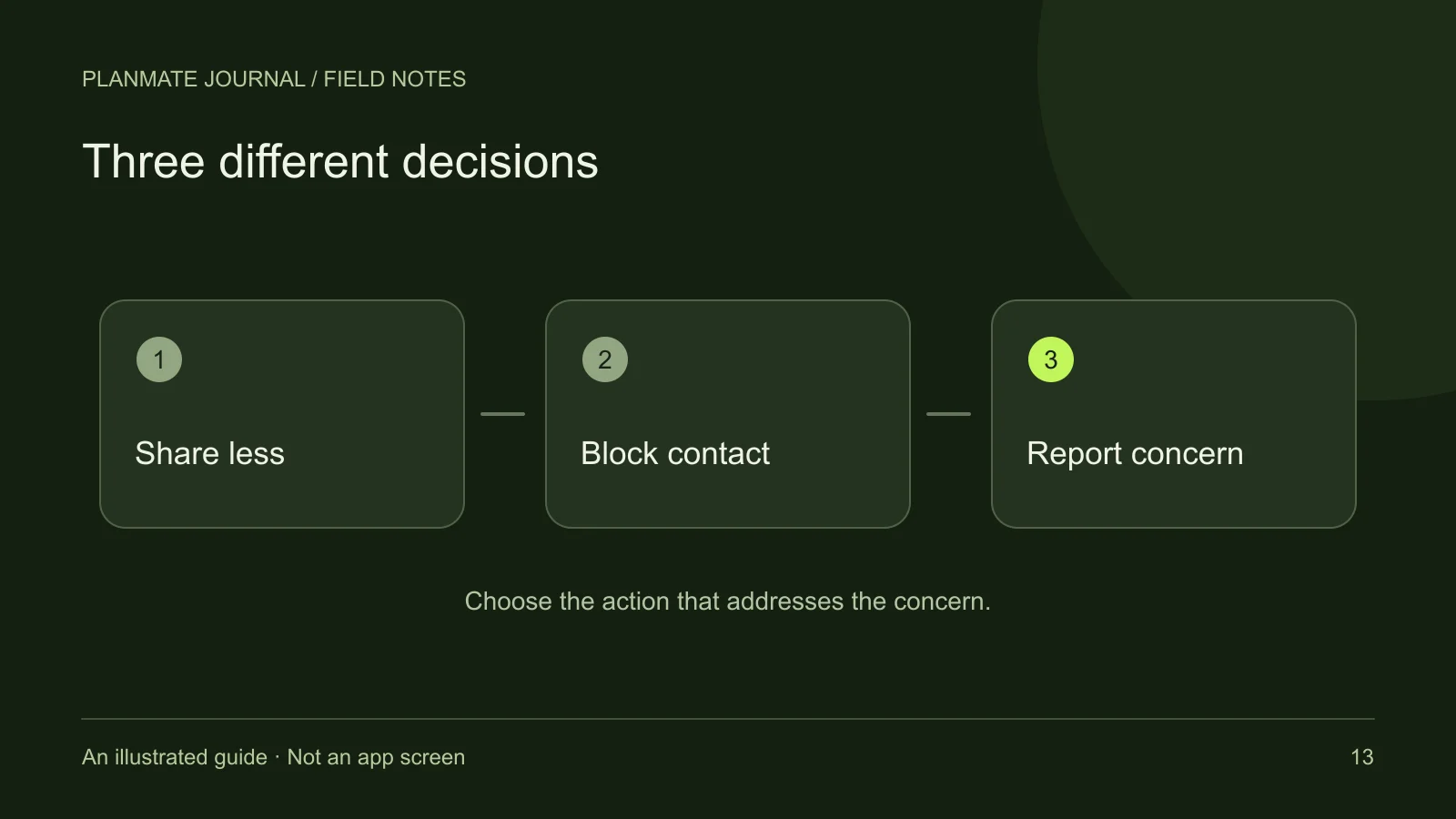
Use a report when there is a specific concern such as impersonation, harassment, a suspicious offer, or a privacy violation. Describe what happened in plain language and separate observed facts from your interpretation. “The account asked for my login code” is more actionable than “This person looks fake.”
Blocking can manage your own interaction boundary, while reporting submits a concern for review. Complete the action you need rather than assuming one automatically performs the other. Read PlanMate privacy, blocking, and reporting for the supported workflow.
Use a simple stopping rule
Before committing, ask whether you understand the activity, the location, the timing, the costs, and the next participation step. If a key detail remains unclear and the person will not clarify it, choose another plan. You do not need certainty about their motives to make that decision.
For an in-person meeting, pair this approach with practical meetup preparation. The goal is not constant suspicion. It is the freedom to slow down, ask a relevant question, and decline when the answers do not support a comfortable decision.