Verification and Meetup Eligibility: What the Difference Means
Separate a profile verification badge from admission, host approval, payment confirmation and attendance when evaluating a social meetup.
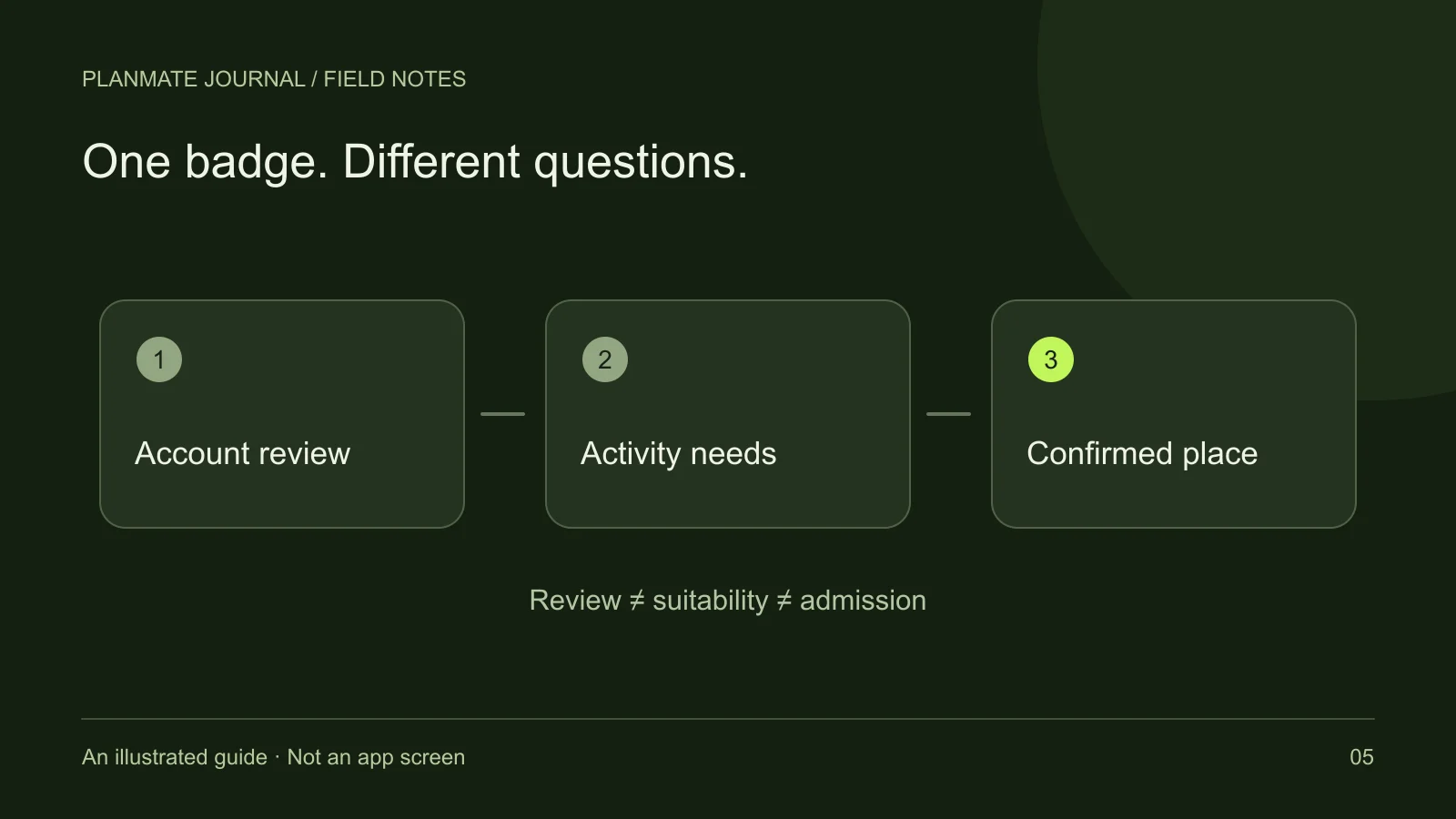
A verified member requests the last place at a full board-game table. Does the badge create another seat? No: account review and admission answer different questions. The same distinction applies to equipment requirements, payment and check-in.
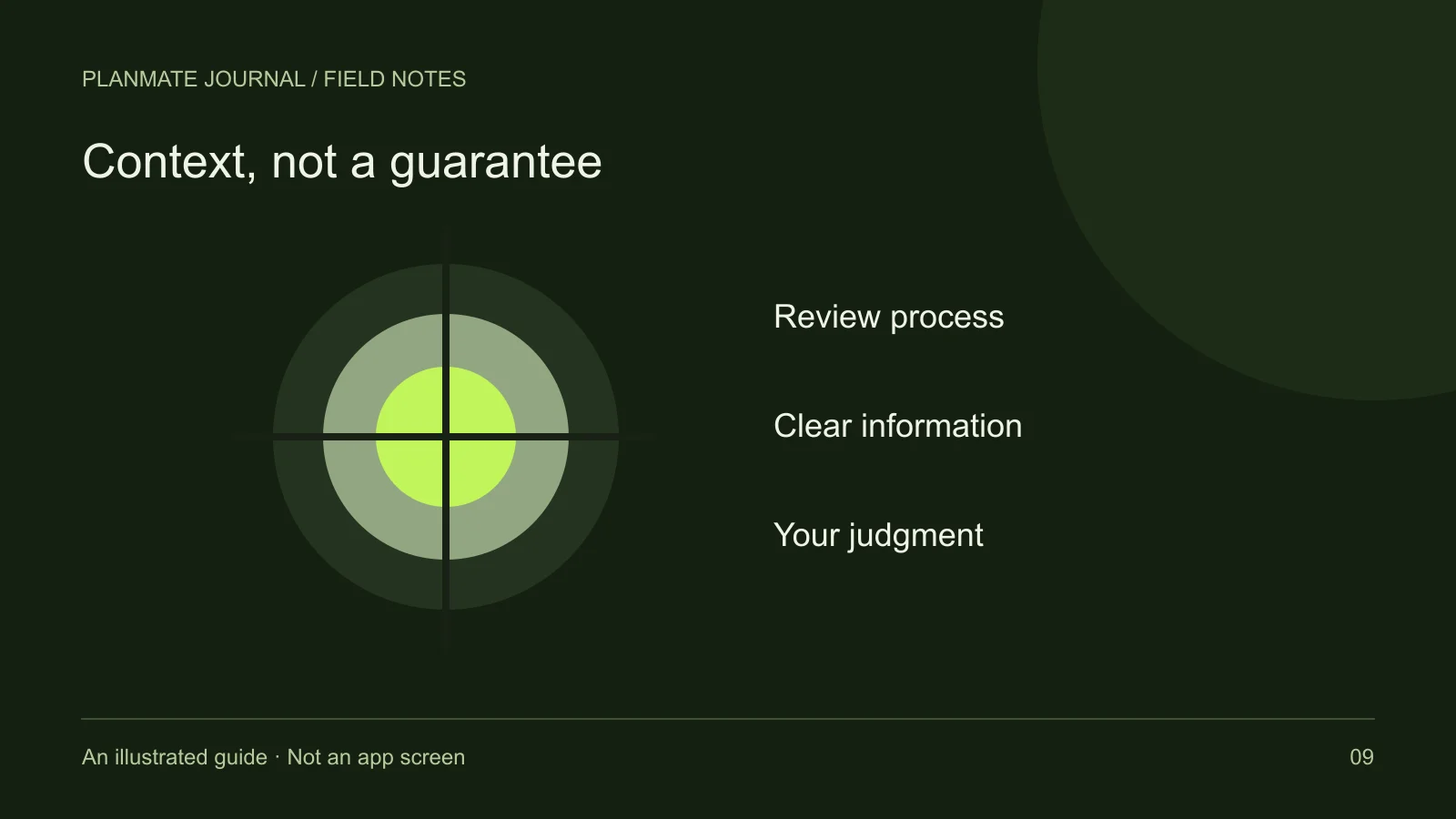
Use this guide to identify which question you need answered. It explains the separate stages without implying that PlanMate offers an automatically enforced verified-only plan type.
Verification concerns an account process
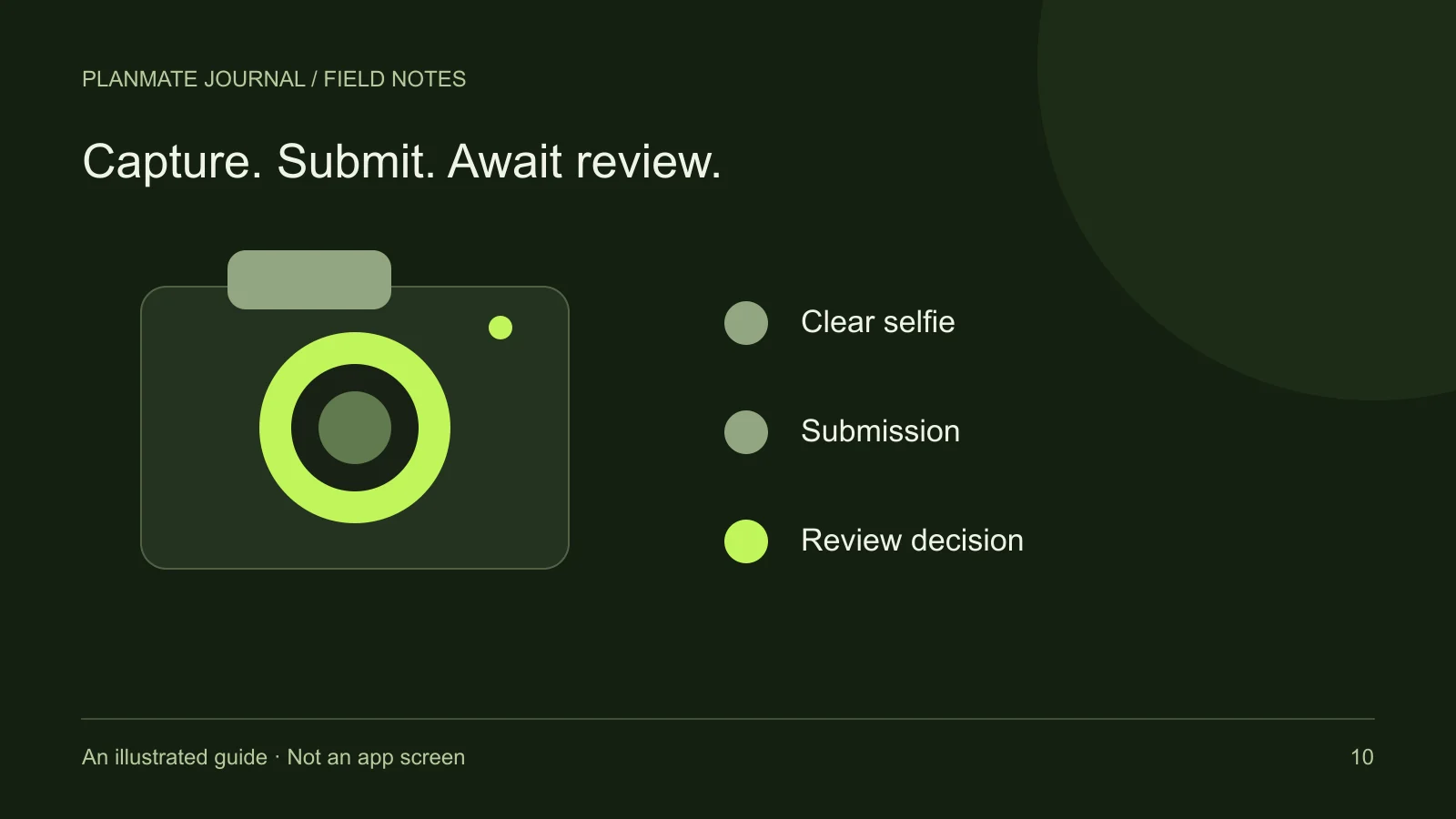
Profile verification asks whether an account has completed a particular review process. In PlanMate, the confirmed workflow includes selfie submission and manual review. The app distinguishes pending review from approval, and an approved status can be reflected in a verified badge.
That does not tell you every fact about the person. It is not a promise about their behavior, professional qualifications, financial reliability, or suitability for a specific activity. It should not be presented as a government-document check merely because a different part of an app uses identity-related language.
If you want to understand PlanMate's actual workflow, read how selfie verification works. The useful question is “What process does this badge represent?” rather than “Can I stop making careful decisions because the badge exists?”
Eligibility concerns the requirements of an activity
An activity may require a particular skill, equipment, availability, or preparation. A climbing session and a café discussion have different practical requirements. A verified profile does not show that someone can complete a route, knows the rules of a sport, or has the equipment needed to participate.
Hosts should distinguish a preference from a requirement. “Beginners welcome” is a description of the format. “Bring your own racket” is a preparation requirement. “We would prefer people who can stay for the whole session” is an expectation that should be clarified before acceptance rather than used as a surprise condition at the venue.
On PlanMate, core planning fields can describe the experience level, equipment, schedule, and other notes. Those descriptions help people decide whether to request a place. They should not be confused with a claim that every requirement is automatically checked by the platform.
Admission concerns a confirmed place
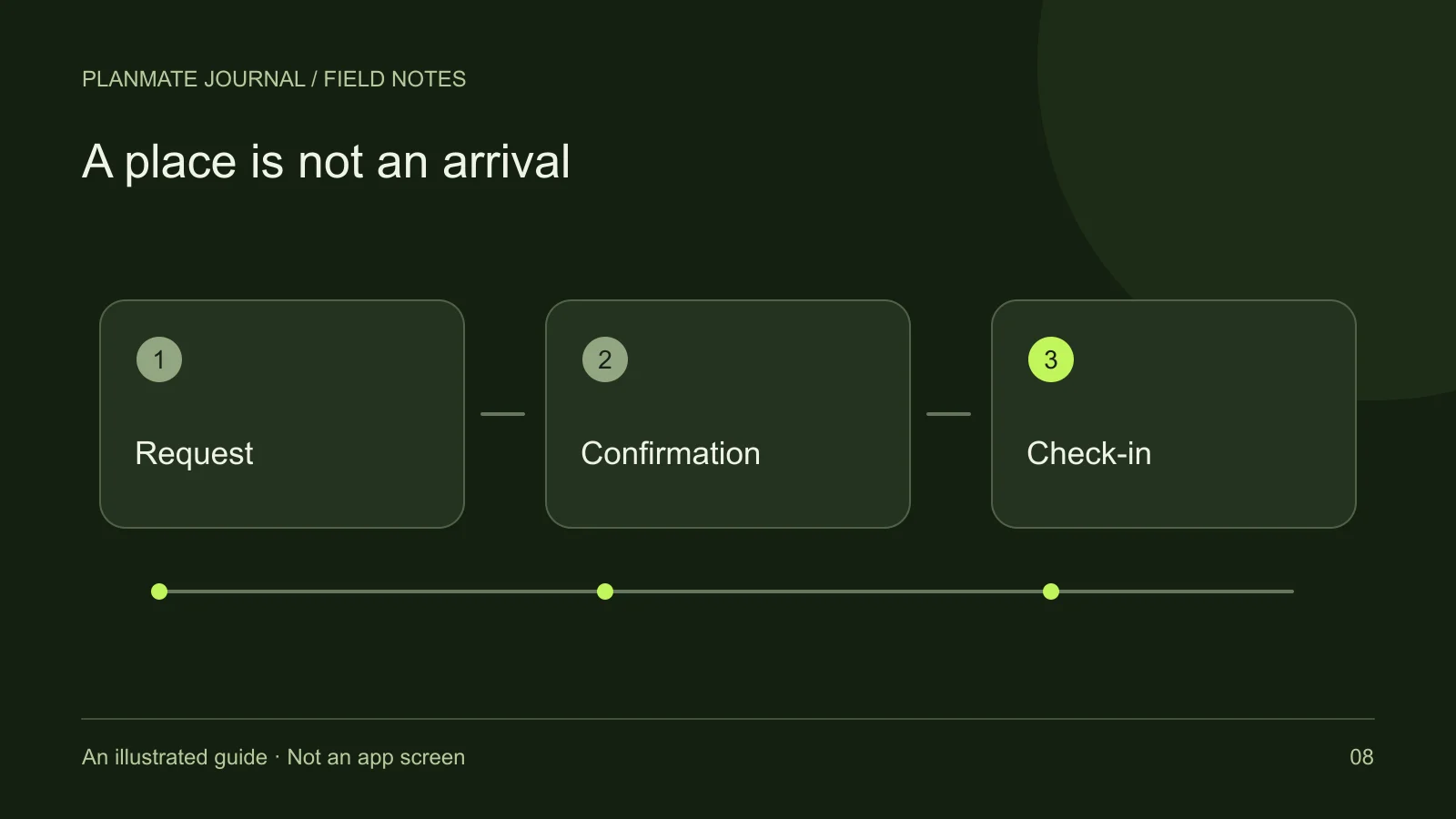
For a free PlanMate activity, a participant sends a request that the host can accept or decline. A pending request is not admission. A host may need to check numbers or answer a question before deciding. The app's participation state provides the reference for whether the request has been accepted.
Consider an illustrative board-game meetup with limited table space. A verified member sends a request after the group is already full. Their badge does not create another seat. Another member's request remains pending while the host checks the venue. Neither person should assume acceptance based on profile status alone.
A shared link is also not admission. It makes information easier to reach, but it does not automatically place everyone who opens it on the participant list. Our visibility and participation guide explains why public discovery and confirmed membership are separate stages.
Payment concerns a transaction, not a personal endorsement
If an activity offers paid checkout, a successful transaction is part of a booking process. It should not be interpreted as a guarantee that the activity will meet every expectation or that the host has been professionally certified. The relevant status is whether the app shows a confirmed booking after its checks.
Likewise, a payment that is pending is not the same as a confirmed place. If the result is uncertain, check the booking status and use support rather than sending repeated transfers or relying on a screenshot in a conversation. This guide does not establish live availability of any payment method.
For hosts, money-related responsibilities require their own clarity. Explain what a listed price covers and direct people to the current terms. Do not use a verification badge as evidence that refunds, payouts, or venue arrangements are guaranteed.
Attendance concerns arrival at the actual activity
Check-in records a later event: a confirmed participant has arrived and the host has validated the pass through the attendance process. A pass is not a substitute for profile verification, and a profile badge is not a substitute for a pass. Each exists for a different purpose.
PlanMate includes a QR pass and host scanning flow. It can distinguish outcomes such as a valid check-in, an expired pass, or a pass already used. The participant should follow the current instructions rather than assuming an old image or another person's pass is enough.
Attendance also does not imply consent to everything that happens afterward. A person who checks in can still decline a photograph, refuse to share contact details, or leave if the situation changes. Administrative status does not remove personal boundaries.
A practical way to ask clearer questions
When a screen or message is ambiguous, identify the stage you are trying to understand. Instead of asking “Am I verified for this event?” ask “Has my profile review been approved?” or “Has the host accepted my request?” Those questions are easier to answer accurately.
- For an account badge: ask what review it represents and whether the status is approved.
- For activity suitability: ask what experience, equipment, or preparation is required.
- For a place: check whether participation is pending or confirmed.
- For a transaction: check the booking result rather than relying only on a payment attempt.
- For arrival: use the current pass and follow the host's check-in instructions.
Hosts can use the same distinctions when responding. “Your request is still pending while I confirm seating” is clearer than “You are not verified yet” when account verification is not the issue. Accurate wording prevents unnecessary account changes and avoids promising access that the host has not granted.
The next time you see a badge, a button, or a status message, ask what specific question it answers. That habit is more useful than treating every positive-looking symbol as the same assurance. For the participant journey from request to arrival, continue with booking and attendance.